
Unlock the Editor’s Digest for free
Roula Khalaf, Editor of the FT, selects her favourite stories in this weekly newsletter.
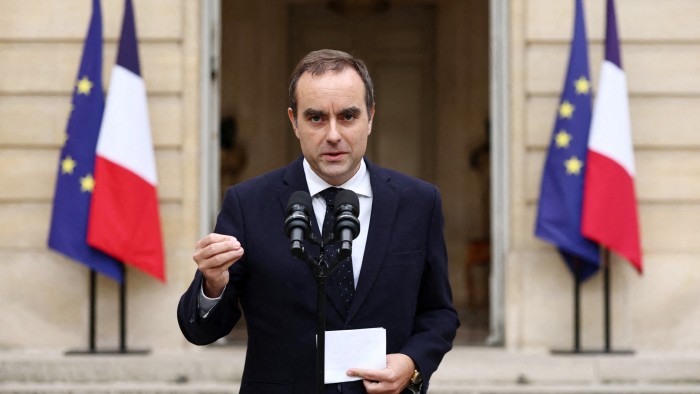
The resignation of Sébastien Lecornu after less than four weeks as French prime minister plunges the country into its worst political crisis for almost 70 years. It is terrible for France and bad for Europe, which needs decisive leadership now more than ever. France is not only ungovernable, its public finances are in a mess, the economy is weak, social tensions are rising and the markets are jittery. The country may not be on the brink of civil war as it was in 1958, but then it had a way out of the mire in the form of Charles de Gaulle. There is no saviour on the horizon now.
While President Emmanuel Macron carries much of the blame for today’s morass, the entire French political class shares it, either for failing to act responsibly given France’s gaping budget hole or for refusing to compromise on their demands. The left and centrist parties worked together to prevent the far-right Rassemblement National from winning a majority in last summer’s snap parliamentary election, but have done much since then to propel it closer to power.
The abrupt departure of Lecornu, a Macron protégé, is a humiliation for the president. It proves that his method of maintaining a tight grip on the direction of the country while making minimal concessions to the opposition is exhausted. Lecornu was already walking a tightrope, trying to craft a budget that would satisfy both the demands for social justice on the centre left and the aversion of mainstream conservatives to tax rises, while preserving the remnants of Macron’s pro-business reformist legacy.
Then Lecornu bungled the formation of the government. Having promised “rupture” with his predecessors, he kept most ministers from the outgoing cabinet in place and brought back Macron loyalists. The appointments enraged not only the left but also the centre right, who warned they might walk away. Macron has counted on the support of the mainstream conservatives since losing his majority in 2022. Now this loose pact is falling apart. Macron’s own centrist allies are increasingly taking their distance as they limber up for the race to succeed him in 2027.
In his resignation statement, Lecornu blamed the political parties for acting as if each had a majority on its own and criticised senior members of the centrist camp of acting with their presidential ambitions uppermost. He is not wrong. But the blame ultimately lies with Macron. His dissolution blunder last year depleted his centrist camp and paralysed the government. Yet he continued to act as if nothing had changed.
Macron could try to name another premier, his fourth since last summer, this time from the centre left. But the fracture that has now opened up with the mainstream conservatives makes this even less viable than before. The revolving door is damaging the president’s credibility and those political forces still allied with him. So a dissolution of parliament looks inevitable if undesirable.
A further snap poll would probably crush the parties of the centre while strengthening the far-right RN, which is increasingly seen as an alternative party of government, not just a protest vote. But its incontinent fiscal policies, discriminatory attitude towards immigrants and protectionist instincts would do nothing to solve France’s problems.
Macron may calculate that after fresh elections a dose of RN in government would turn off voters before the more important presidential contest. But there is no guarantee that the far right would accept what they would see as a trap. An interim government can roll over the 2025 budget, but there is no good way out of the political quagmire until 2027. In the meantime, France’s standing in Europe will weaken as investor concerns over its debt burden and inability to rein in spending continue to mount.
Read the full article here